




Closing your swimming pool for winter: a simple guide
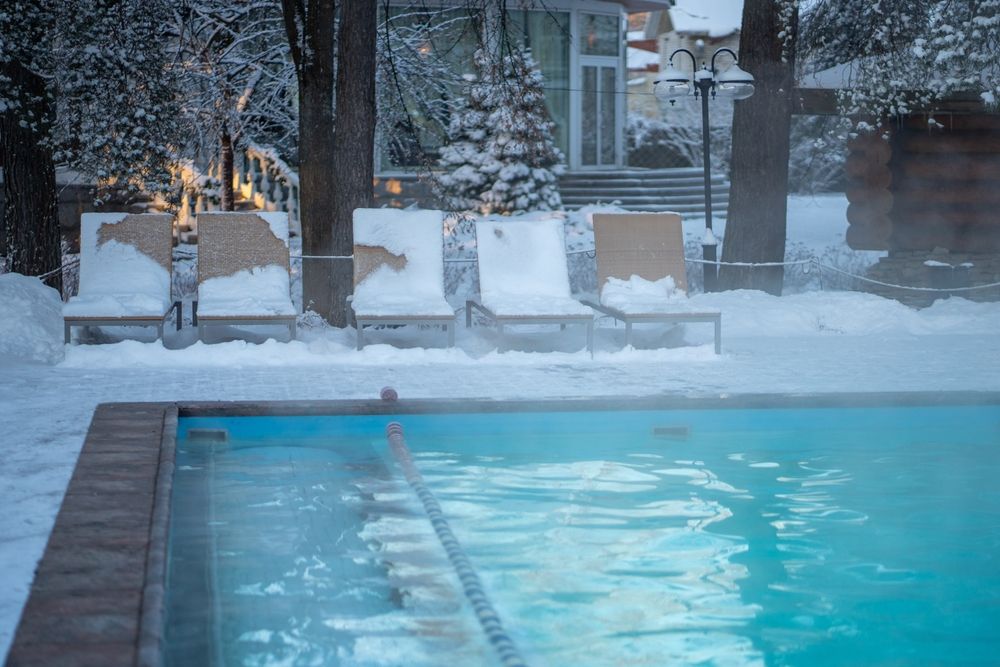
Lower the water below the skimmers, drain your pipes, and protect your pool from frost damage. The right method depends on your local winters, so choose a full shutdown for colder areas or the active method for milder spots. A few simple steps keep your pool safe until spring.
In short
Closing your pool properly protects it from frost all winter long. There are two ways to do it: a full shutdown drains the pool completely and switches everything off, which suits colder regions best, while the active method keeps the pump running for a few hours a day, which works well in milder areas. Below, we explain how to choose, then walk through the exact steps for each.
When should you close your pool for winter?
Close your pool once the water temperature stays below 12°C. Algae and bacteria stop growing at this point, so you can safely stop maintaining the water.
Try not to close it on the first cold day, though. If you close too early, the water can still turn green before winter properly sets in. Watch the water temperature rather than the air temperature, and wait until it stays consistently below 12°C before you start.
Why closing your pool for winter matters
Closing your pool does more than tidy it away for a few months, it actively protects your investment. Here's why it's worth doing properly:
Protects the structure: water expands as it freezes, and this can crack your pool shell and pipes. Closing it correctly keeps everything safe from this kind of expensive damage.
Saves you money: slowing or stopping the pump cuts your electricity use, and you'll need fewer chemicals over winter too.
Keeps the water in good condition: treating the water before you close up stops algae and bacteria taking hold, just as a good pool maintenance routine does in summer, making it far easier to open the pool again in spring.
Extends your pool's lifespan: less exposure to frost means less wear and tear over time.
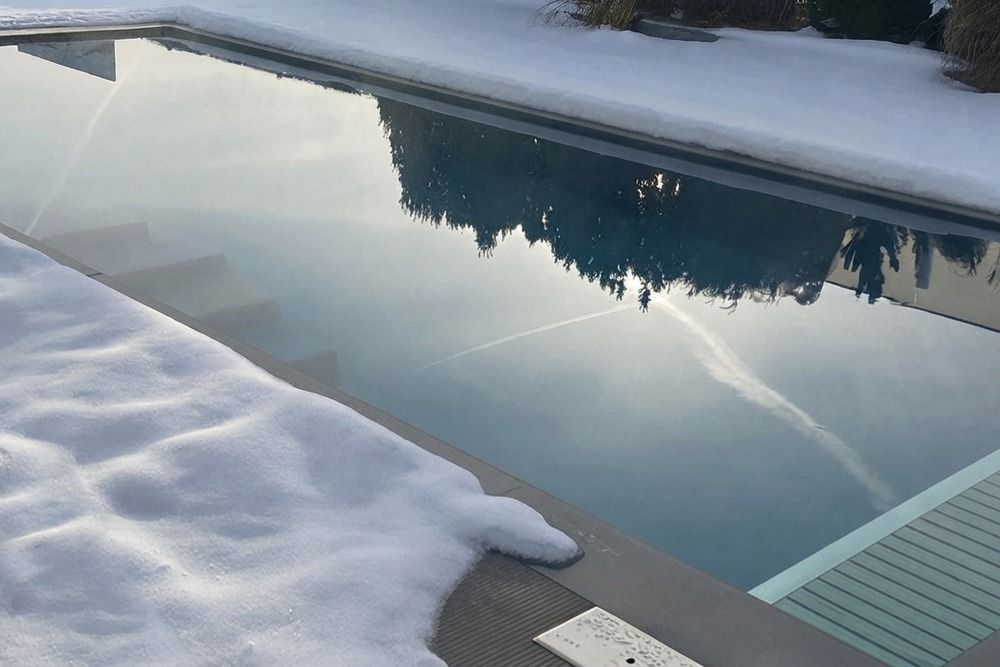
A properly closed pool will get through winter safely, even under snow.
Full shutdown or active method: which suits your pool?
Your local winters and your pool type both decide this for you.
The full shutdown In areas with harsh winters, a full shutdown is the safer choice: you lower the water, drain the pipes, and switch the pump off completely.
The active method In milder areas, the active method works well instead, since it just needs the pump running for a few hours a day.
Pool type matters too. Concrete and tiled pools handle frost well, so the active method suits them. Liner and polyester pools are more sensitive to cold, so a full shutdown is the safer option for these.
The full shutdown method
This takes a little more preparation, but it protects your pool completely over winter.
1. Clean the pool thoroughly
Vacuum the floor, brush the walls, and empty the skimmer baskets (the collection points that trap leaves and debris) so nothing is left to rot over winter. Backwash a sand or glass filter, or rinse a cartridge filter with a hose, so it's ready to go again in spring.
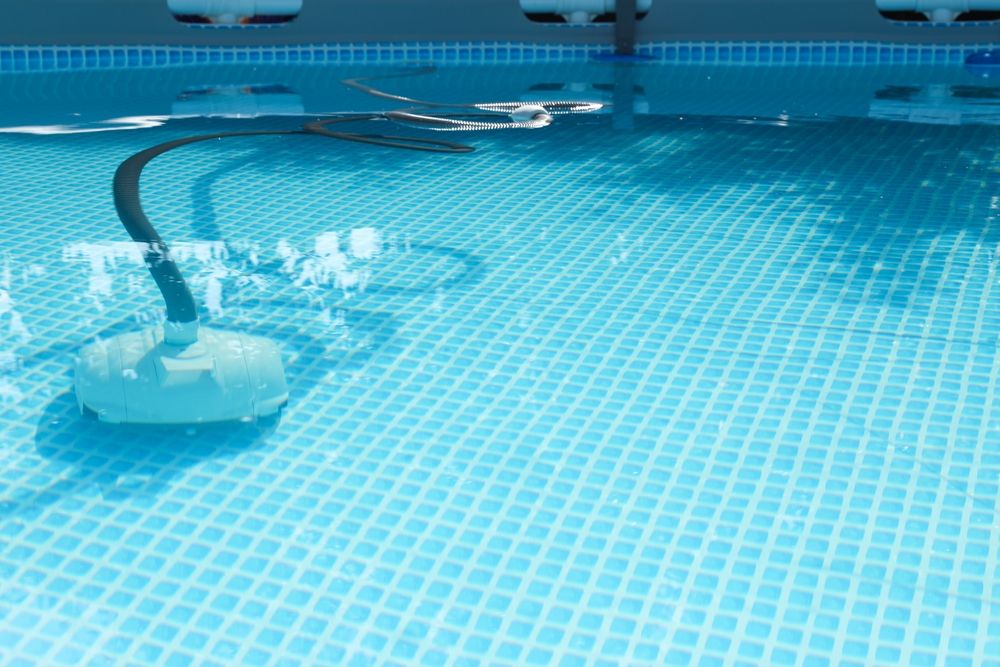
A deep clean now ensures healthy water in spring. Image: Shutterstock.
2. Balance and treat the water
Adjust the pH to between 7.2 and 7.6, then shock-treat the water to kill off any remaining bacteria, following the correct chlorine dosage for your pool size.
Run the pump for at least 24 hours so the treatment spreads fully, then add a winterising product to keep algae and limescale away while the pool is closed.
3. Lower the water level
Lower the water to around 10 cm below the return jets and skimmers (the inlets and outlets around the pool edge), so there's no water left in them to freeze.
Never drain the pool completely, since the water's weight is what holds the pool shell in place, and an empty pool can lift or crack.
A submersible drainage pump makes this step easy: it lowers the water quickly and safely, without you needing to watch it the whole time. You'll need one if you lack a bottom drain. A submersible pump is the tool for the job.
Lower the water level with our range of submersible pumps
4. Drain the pipes and filtration system
Drain the whole system, including the pipes, pump, and filter, since any leftover water can freeze and cause damage. Remove the drain plugs from the pump and keep them safe in a skimmer basket for spring.
Store the pump, filter, and ladder somewhere dry and frost-free if you can, ready to reinstall your swimming pool pump when you reopen the pool.
5. Protect the pool from frost
Place winter floats on the water to absorb ice pressure, fit gizmos in the skimmers, and use winter plugs to seal the jets, so nothing freezes inside the pipework.
6. Cover the pool
Cover the pool with a winter cover to keep out leaves and light. This stops algae building up and saves you a big clean-up job in spring.
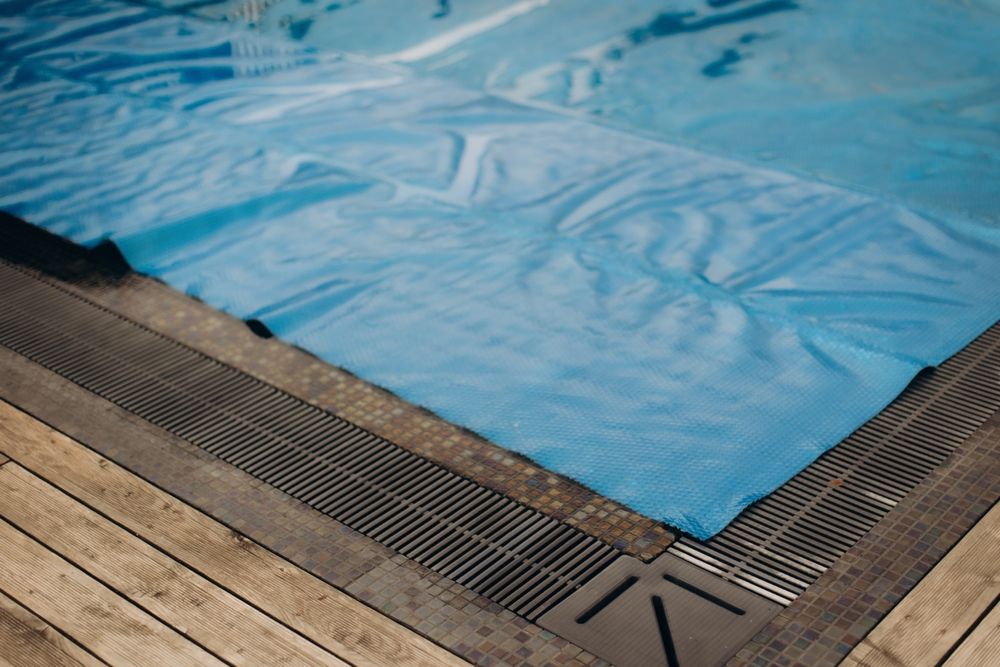
A cover protects your pool all winter long. Image: Shutterstock.
The active method
This method is simpler to set up, since your pool never fully shuts down, though it does need occasional checks.
1. Clean and treat the water
Clean and treat the water fully first. Clean water is far easier to maintain right through winter.
2. Adjust the pump
Set the pump to run for a few hours each day, ideally in the early morning. As a rough guide, halve the water temperature to estimate the runtime, so 6°C water suggests around 3 hours. If your pump can't keep up, it may be worth checking which swimming pool pump suits your pool.

Balanced water stops algae growing over winter. Image: Shutterstock.
3. Turn on frost protection mode
Turn on frost protection mode if your pump has one, so it kicks in automatically when temperatures drop. If not, run the pump continuously during freezing spells instead.
4. Check the water regularly
Check the water once or twice a month, topping up treatment if needed. This makes restarting your pool in spring much quicker.
Ready to close your pool for winter?
Closing your pool properly now means less work and no nasty surprises later. Choose a full shutdown if you're in a cold area, or the active method if your winters are milder, and you'll open up a clean, undamaged pool when the weather turns.
Have any questions about our submersible pumps or preparing your pool for winter? Our customer service team is here to help you.