




Swimming pool maintenance: Keep your pool clean all summer long

Is your pool looking green and cloudy? You want to relax in the garden, not spend your weekend scrubbing. With a simple routine and the right equipment, you can keep your pool water clean and safe all summer. Here is exactly how to do it.
Quick summary
Good swimming pool maintenance starts with removing debris daily and running a reliable filter pump. Test your water weekly and adjust the chlorine and pH levels as needed. Always cover the pool after swimming. This routine takes just a few minutes a week and prevents most problems before they start.
Why regular pool cleaning is important
Untreated pool water stays safe for no more than two days. After that, bacteria and algae multiply quickly. This creates a health risk for you and your family. Dirty water also shortens the lifespan of your pump, liner, and fittings. Keeping on top of your pool pump maintenance ensures the water keeps circulating and stays safe to swim in.
A consistent maintenance routine costs just a few minutes each week. It also saves you money. You replace the water far less often, which cuts your water bill and reduces waste. A clean pool is easier to enjoy and cheaper to run.
Five steps for crystal-clear pool water
These five steps cover everything you need for effective swimming pool maintenance. Follow them weekly and you will prevent the vast majority of problems.
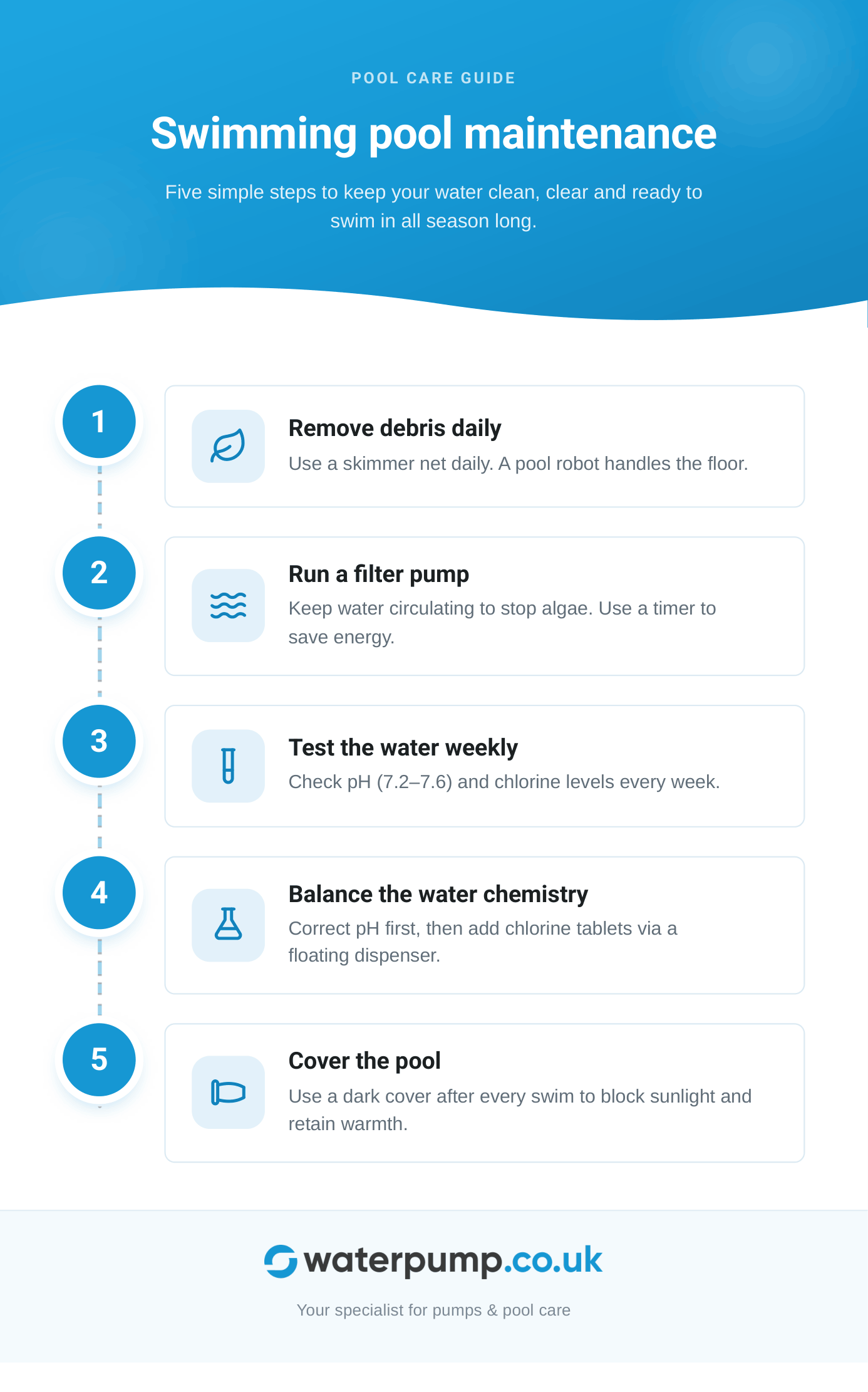
5-step plan for crystal-clear swimming pool water. Image: Waterpump.co.uk.
Step 1. Remove debris daily
Leaves, insects, and garden debris land in your pool every day. Left in the water, they break down and cause cloudiness fast. Use a sturdy skimmer net to remove surface debris each day.
For the pool floor, an automatic pool robot saves a lot of time and effort. It vacuums up settled dirt without you having to scrub by hand. This keeps the water fresher for longer and reduces the load on your filter pump. For most garden pools in the UK, a basic robot is a worthwhile investment.
Step 2. Run a filter pump for good circulation
Still water spoils quickly in warm weather. A pool pump keeps water circulating so algae cannot take hold. Without circulation, even well-treated water turns green within days.
Choose an energy-efficient pool pump with a built-in timer. This lets you set exact run times and cuts your electricity costs. The pre-filter catches coarse debris before it reaches the pump. Rinse the pre-filter under the tap once a week to keep it working properly. Browse our range of pool pumps to find the right fit for your pool size.
Once you have chosen your pump, connecting your pool pump is easy to do yourself.
Our popular swimming pool pumps
Step 3. Test the water weekly
You cannot judge water quality by eye alone. Test your pool water every week using test strips. These measure the two values that matter most: pH and chlorine.
The pH value shows how acidic or alkaline your water is. The ideal range is 7.2 to 7.6. Within this range, chlorine works at full strength. Outside it, chlorine becomes far less effective and the water can irritate skin and eyes. Testing takes about one minute and tells you exactly what needs adjusting.

Checking the pH value and chlorine level of the water. Test the water quality regularly. Image: Shutterstock.com
Step 4. Balance the water chemistry
Once you have your test results, adjust as needed. Always correct the pH first before adding chlorine. If the pH is off, chlorine cannot do its job properly.
Chlorine kills bacteria and algae and keeps the water safe for swimming. Add chlorine tablets using a floating dispenser. Never throw loose tablets or granules directly into the pool. Direct contact with the liner can cause permanent bleaching or damage. Keep a simple maintenance log so you can spot patterns over time.
Step 5. Cover the pool after every swim
A dark, solid pool cover is one of the most effective tools in swimming pool maintenance. Fit it every time you finish swimming. It blocks sunlight, which slows algae growth significantly.
A cover also keeps out leaves, insects, and dust, which means less cleaning overall. In the UK climate, a cover also helps retain warmth. This reduces how long your pump needs to run to keep the water at a comfortable temperature, which saves on electricity. For outdoor pools, a cover extends the usable season into spring and autumn.
Solving common pool problems
Green or cloudy water? That's frustrating, but always fixable. Below you'll find out how to tackle the two most common problems quickly.

A dirty, green pool full of algae. Image: Shutterstock.com
How to fix green pool water
Green water is caused by algae. It often follows a spell of warm, sunny weather or a heavy thunderstorm. Fix it with a chlorine shock treatment, which is a large single dose of fast-acting chlorine. This kills algae quickly.
After treating, run your filter pump continuously for 24 hours. This filters out the dead algae and clears the water. Scrub the pool walls with a brush to remove any algae clinging to the surface. You should see a clear improvement within 24 to 48 hours.
How to fix cloudy pool water
Cloudy water is usually caused by a blocked or dirty filter. Check and clean your filter cartridge first. If the water stays cloudy, test the pH and chlorine levels and correct any imbalance.
If the water is still not clearing, use a liquid flocculant. This product binds tiny suspended particles together into larger clumps that your filter can then catch. It is a fast and effective fix for persistent cloudiness. Most pools clear up within a day of treatment.
Seasonal swimming pool maintenance
Your pool needs different care in spring than in autumn. Read what to do below.
Opening your pool in spring
Before the first swim of the year, give your pool a thorough start-up. Follow these steps:
Scrub the walls and floor with a pool brush.
Top up the water to the correct level.
Use a start-up maintenance kit designed for pools.
Add a chlorine shock dose to sanitise the water.
Run the filter pump for a full 24 hours.
This sets you up for a clean, trouble-free summer.
Closing your pool for winter
Winterising your pool protects the pump, liner, and fittings from frost damage. For most UK garden pools and frame pools, the process is straightforward:
Dry the liner thoroughly before folding and storing it.
Clean and dry the pump, then store it indoors.
Store all fittings and accessories in a dry place.
For permanent in-ground pools, lower the water level below the skimmers (the openings in your pool wall that circulate water). Drain all pipework fully to prevent freezing and cracking. Cover the pool tightly with a winter cover until spring.
Built-in skimmer

A built-in skimmer is a small opening in the pool wall. It removes dirt. Image: Shutterstock.com
Detachable skimmer

A detachable skimmer hangs on the pool wall. It removes dirt. Image: Shutterstock.com
What does swimming pool maintenance cost?
The ongoing costs of pool maintenance are manageable with the right setup. Here is what to budget for:
Pool pump electricity: An energy-efficient pool pump starts from around £499. Modern pumps use significantly less energy than older models.
Chlorine tablets: A tub costs roughly £15 to £60 depending on pack size.
Filter cartridges or sand: Budget a small amount each season for filter upkeep.
Test strips: A box costs between £3 and £10 and covers a full season of weekly testing.
Keeping up with routine maintenance reduces the need to drain and refill your pool. This saves water and cuts costs over the season.
Ready for a fresh, carefree summer?
Swimming pool maintenance does not need to be complicated or expensive. A simple weekly routine, the right pump, and a few basic products keep your water clean all season. If you are unsure which pump suits your pool, browse our full range of pool pumps or get in touch. We are happy to help you find the right solution.
Frequently asked questions about pool maintenance (FAQs)
Do you have questions about keeping your pool clean? We answer the most common ones below.