Draining a swimming pool: when to do it and how to do it safely
When was the last time you thought about what is actually in your pool water? After years of use, chemicals, sunscreen, and organic matter build up to a point where no amount of treatment can fully restore the balance. This guide covers everything you need to know about safely and efficiently draining a swimming pool.
Quick summary
Most swimming pools need to be drained every 5 to 7 years, or sooner if water quality cannot be restored with standard chemical treatment. Before draining, always check groundwater levels, dechlorinate the water, and confirm the correct disposal route with your local water authority. A submersible pump is the most practical tool for draining a pool efficiently and without damaging built-in pool equipment. Once empty, use the opportunity to clean and inspect the pool before refilling.
What does draining a swimming pool mean?
Draining a swimming pool means removing all or most of the water from the pool so that the basin is empty or nearly empty. This gives you full access to the pool surfaces and any equipment that needs attention.
It is different from regular swimming pool maintenance tasks such as skimming, vacuuming, or backwashing a filter. Those tasks are done with the water still in the pool. Draining is a more significant step taken only when there is no other practical option.
Pool professionals generally recommend draining an in-ground pool every 5 to 7 years, depending on water quality and usage.
When should you drain a swimming pool?
Even with regular upkeep, there are situations where a full drain is the only practical solution. Here are the most common reasons a homeowner might need to drain their pool.
The water stays cloudy or green despite regular treatment
Over time, pool water accumulates dissolved substances, including calcium, salts, sunscreen, oils, and the by-products of pool chemicals. This build-up is measured as Total Dissolved Solids, or TDS. When TDS levels become too high, chlorine and other treatments simply stop working effectively. Algae growth becomes more frequent, and the water may stay cloudy even after treatment. At that point, replacing the water entirely is more practical than continuing to add chemicals.
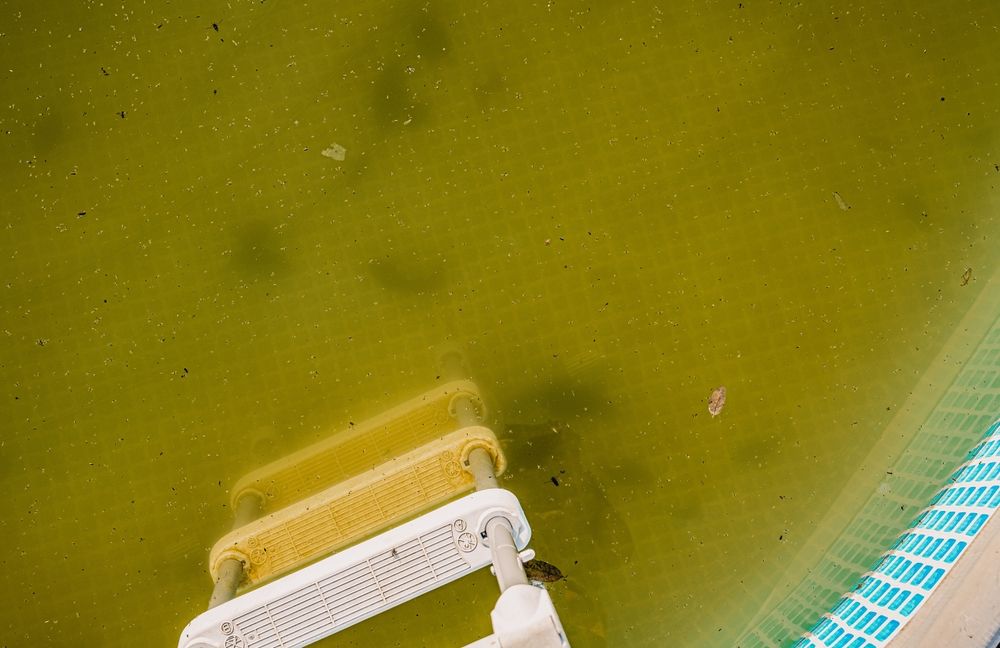
A green or cloudy pool is often a sign that TDS levels are too high to be corrected with chemicals alone. Image: Shutterstock.
The pool has been unused for a full season
If the pool has sat untreated over winter or through a long period of neglect, the water can deteriorate significantly. By the time summer arrives it may be beyond restoration through normal treatment, and a full drain is the most practical way to start fresh.
You need to carry out repairs
If you have noticed cracks in the pool shell, damaged tiles, or loose grout, these need to be fixed on a dry surface. Your pool technician will confirm whether the pool needs to be fully drained before work can begin.
You are preparing the pool for the summer season
Some homeowners choose to drain and refill their pool in spring to start the swimming season with fresh, properly balanced water. This is particularly worth considering if the pool is older or has not been drained in several years.
Important considerations before you start draining
Draining a swimming pool is not as straightforward as it may seem. There are several important factors to consider before you begin.
Check the groundwater level
One of the biggest risks when draining an in-ground pool is hydrostatic pressure. This is the pressure exerted by groundwater in the surrounding soil against the outside of the empty pool shell. If the groundwater level is high, an empty pool can be pushed upward by this pressure, causing significant structural damage. Always check local groundwater conditions before draining, and avoid draining during or after heavy rainfall.
Dechlorinate the water first
Before discharging pool water, you need to know what is in it. Pool water contains chlorine and other chemicals. In the UK, you may need authorisation to dispose of pool water into sewers, surface waters, or groundwater. Guidance from environmental regulators indicates that the water should usually be stored in a vented vessel to allow chlorine to dissipate before disposal, which can take at least 5 days, depending on the volume of water.
If you plan to drain into the public sewer, you may need permission from your local water authority. It is worth checking with your regional water company before you proceed.
Do not drain during wet or freezing weather
Draining should be carried out during dry weather. Wet soil is heavier and exerts more pressure on the outside of an empty pool shell. Cold weather can also cause damage to exposed pool surfaces. Spring and autumn are generally the most suitable times for draining a pool in the UK.
Consider your pool type
Not all pools are built the same way, and the type of pool you have affects how safely it can be drained. Vinyl liner pools rely on water pressure to keep the liner in place, so draining them fully can cause the liner to shrink, wrinkle, or detach from the walls. Fibreglass pools are lightweight shells that can crack or shift under hydrostatic pressure from the surrounding soil when empty.
Concrete pools are generally more tolerant of being drained, but structural risks still apply. If you are unsure about your pool type or how it will respond to being emptied, consult a professional before proceeding.
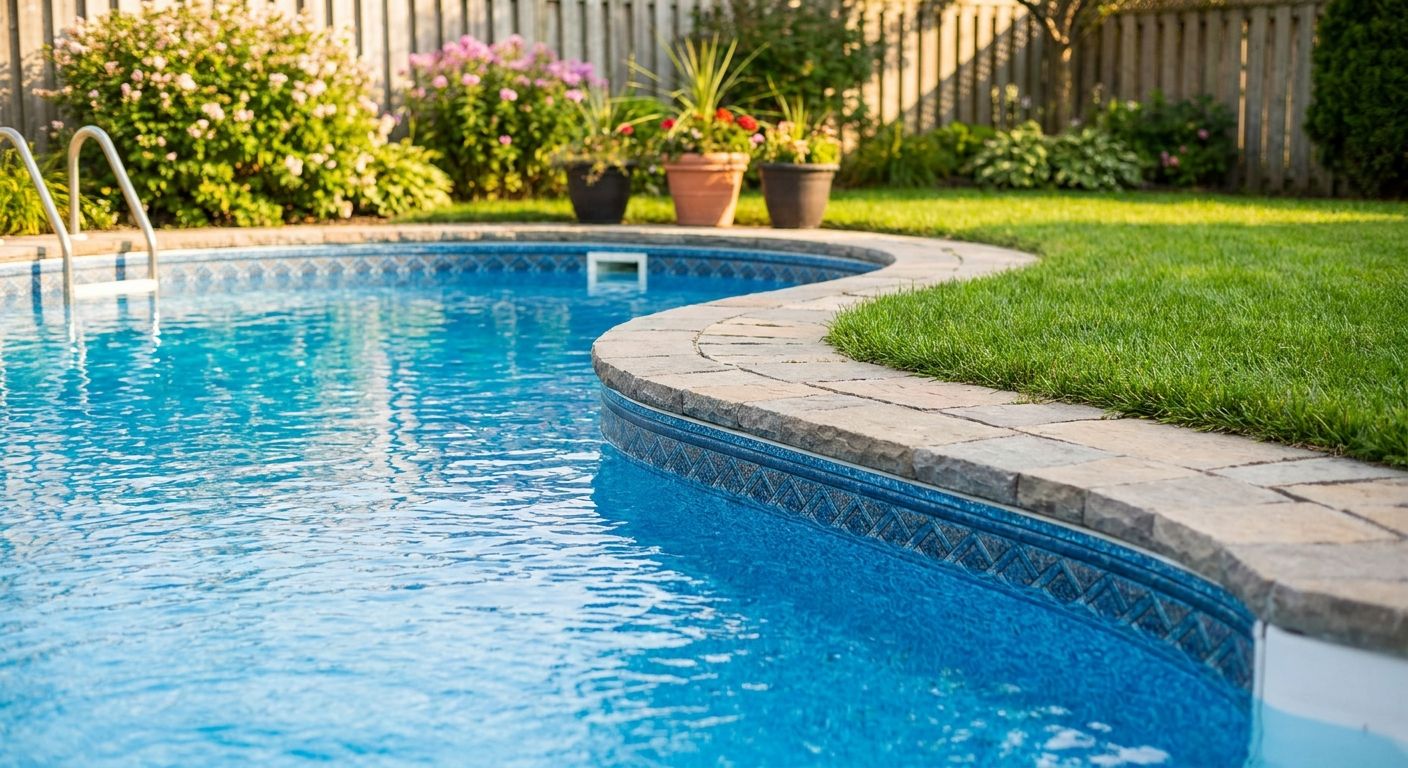
The type of pool you have determines how safely it can be drained, as vinyl-liner, fibreglass, and concrete pools all carry different risks when drained.
How to drain a swimming pool: a step-by-step guide
Once you have assessed the groundwater levels, dechlorinated the water, and confirmed the best method of disposal, you can begin the draining process. Here is how to do it efficiently and safely.
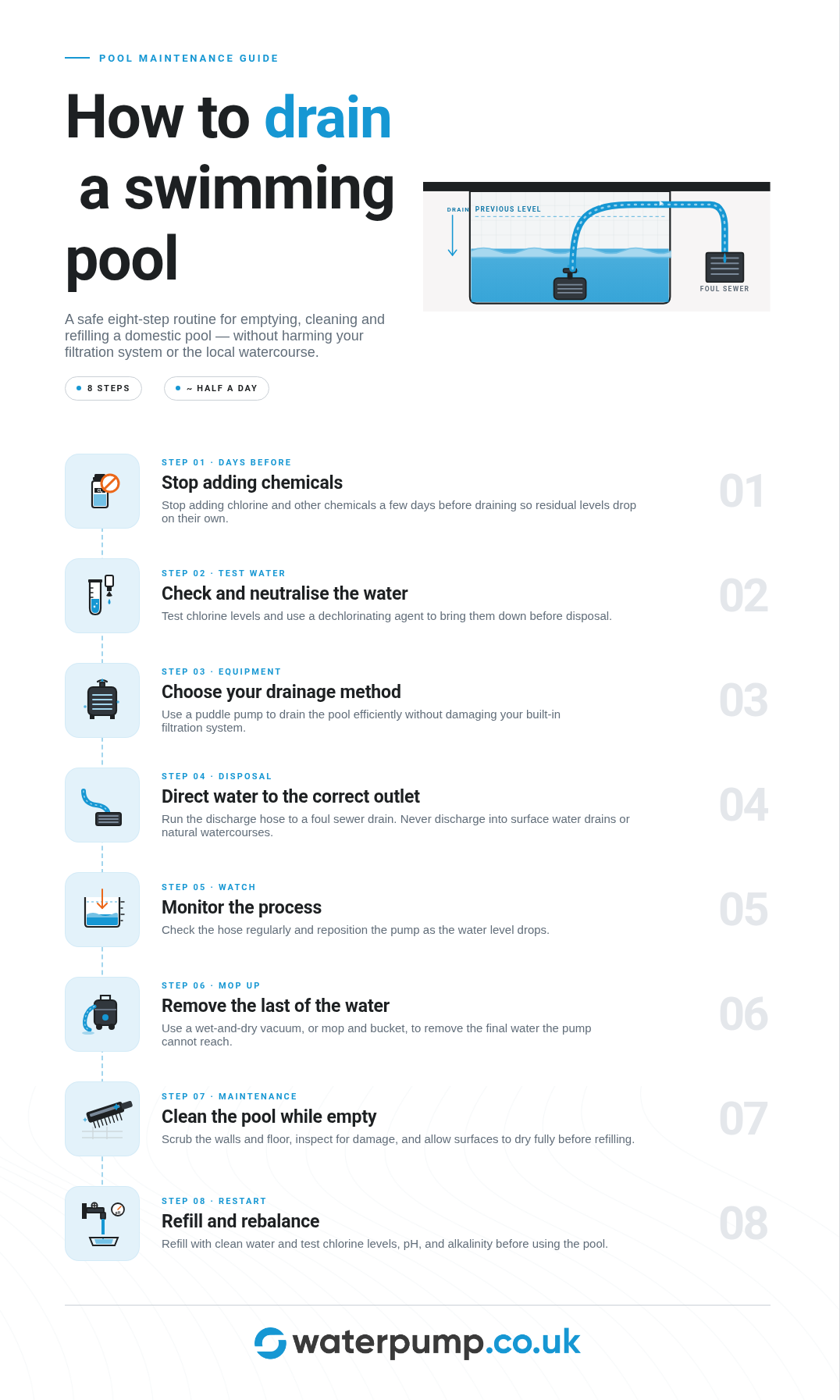
Follow these 8 steps to drain your swimming pool safely and efficiently. Image: Waterpump.co.uk.
Step 1: Stop adding chemicals
A few days before draining, stop adding chlorine and other chemicals to the pool. This allows the chemical levels to reduce naturally before the water is discharged.
Step 2: Check and neutralise the water
Use a pool test kit to check the chlorine levels. If levels are still elevated, use a dechlorinating agent to bring them down before disposal. Many pool suppliers sell sodium thiosulphate for this purpose.
Step 3: Choose your drainage method
Most in-ground pools have a main drain at the bottom connected to the pool's filtration system. However, pool pumps and filtration systems are not designed to drain the entire pool in one go. Attempting to empty the pool fully using the built-in filtration pump can damage the pump and associated equipment.
Which pump do you need to drain a swimming pool?
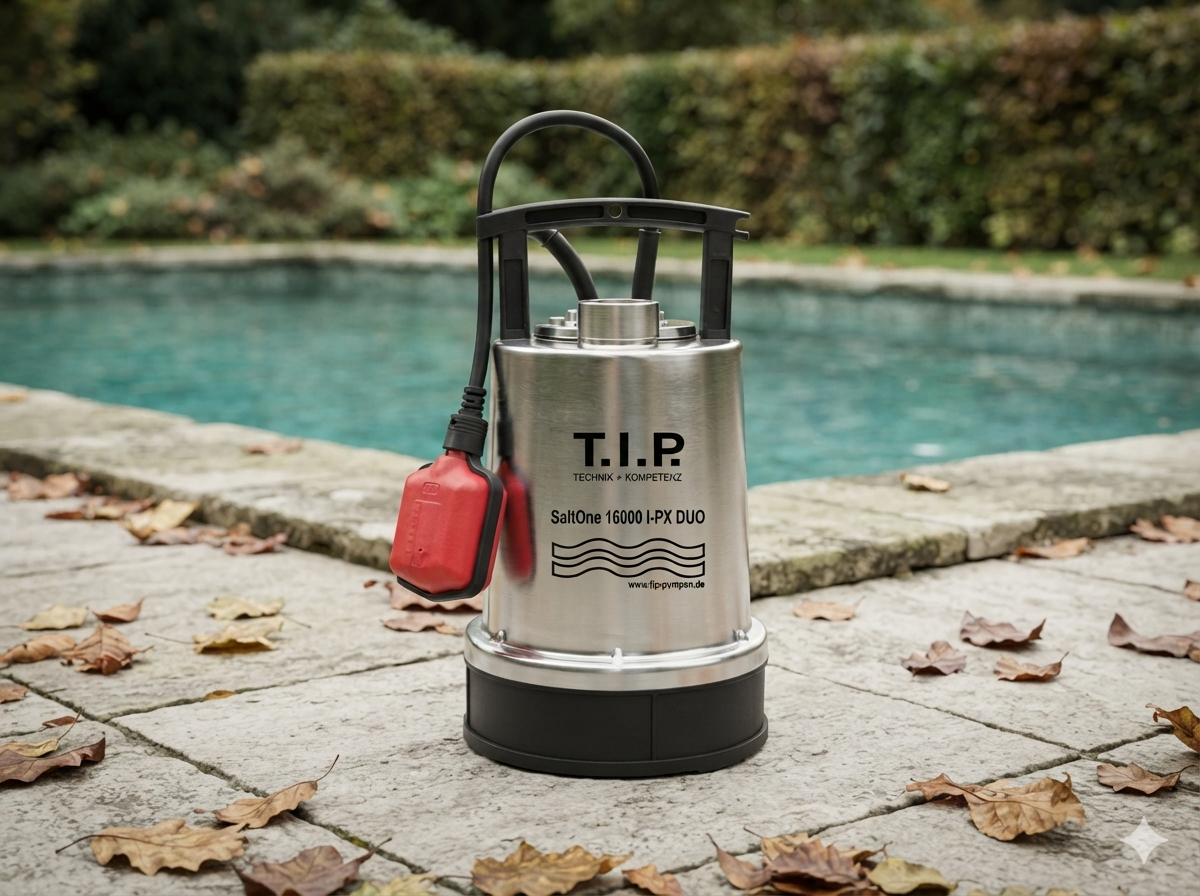
A swimming pool needs a submersible pump built specifically for pool water. Chlorine and salt corrode the housing, seals and impeller of a standard submersible pump, so it will wear out quickly or fail. Pool-suitable pumps have components made to withstand chlorinated and salt water.
The best choice is a submersible pump with flat suction capability. It removes water down to the last few millimetres that a standard pump leaves behind, so the pool floor is fully dry and ready to clean or inspect.
When choosing a pump, pay attention to the flow rate. A larger pool needs a pump with a higher capacity to drain it in a reasonable time. The pumps below are both suitable for chlorinated and salt water, and each product page lists the full specifications so you can match the pump to your pool size.
Submersible pumps for chlorinated and salt water
Step 4: Direct the water to the correct outlet
Run the discharge hose to a suitable drainage point, which may be a foul sewer drain on your property, depending on the permissions you have confirmed with your local water authority. Do not discharge directly onto neighbouring land, into surface water drains, or into natural watercourses.
Discharge hoses for pool draining
Step 5: Monitor the process
Do not leave the pump running unattended for long periods. Check regularly that the hose is secure and that the water is draining to the intended point. As the water level drops, reposition the pump if necessary to keep it submerged and working effectively.
Step 6: Remove the last of the water
Once the pump can no longer pick up water efficiently, use a wet-and-dry vacuum or a mop and bucket to remove the last of the water from the floor of the pool.
Step 7: Clean the pool while empty
With the pool drained, this is the ideal time to scrub the walls and floor, inspect surfaces for damage, clean the waterline, and carry out any necessary repairs. Allow surfaces to dry fully before refilling.
Step 8: Refill, rebalance, and check your pool setup
Refill the pool with a clean water supply and test and adjust the chemical balance before the pool is used again. Check chlorine levels, pH, and alkalinity before anyone uses the pool.

Always test chlorine levels, pH, and alkalinity before using the pool after refilling. Image: Shutterstock.
Ready to drain your pool this summer?
Draining a swimming pool is a straightforward process when you follow the right order. Taking the time to prepare properly, use the right equipment, and dispose of the water correctly means the job is done safely and your pool is ready for the season ahead.
Have a question about which pump is right for draining your pool? Our customer service team is happy to help you find the right solution. Get in touch with us, and we will point you in the right direction.