





Need a water pump?
Find a pump with the selection tool recommended by our experts!
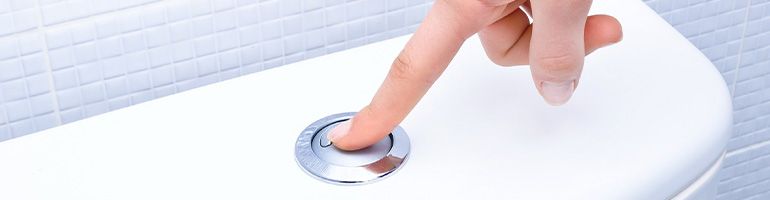
Flushing a toilet is a sustainable practice and will reduce your annual water bills considerably. Normally, rainwater ends up in the sewage system and is purified, which is costly and unnecessary if it is used for particular purposes. Groundwater or rainwater is perfectly fine for flushing a toilet or spraying a garden.
In addition to saving significantly in terms of treatment costs and relieving the sewage system, using rainwater to flush a toilet has several other advantages:
Water conservation: tap water is saved by using natural water for certain purposes;
No limescale in your toilet: rainwater is soft and does not contain calcium and magnesium;
Lower bills with regard to tap water: the annual cost of tap water is reduced by using free natural water.
Flushing a toilet with rainwater, however, may have a few disadvantages, such as dependency on the weather and the season. Only if it rains a lot can larger amounts of rainwater be collected for use during drier periods. In addition, purchasing a rainwater collecting tank will incur extra costs.
If a tank is situated above the toilet, pressure is built up and the water can flow from the tank into the toilet in a natural manner. However, if the storage tank is situated lower than the toilet, or if pressure is too low, a water pump will be needed to transfer water to the toilet.
A water pump ensures that groundwater, surface water (for example, from a canal or a ditch), or collected rainwater is transferred under high pressure to the desired location. Water pumps are available in a dry setup, where they are placed on the surface and draw in water through a tube, and in a wet setup, where they are placed directly in the water.
The dry setup and the wet setup operate differently from each other.
A water pressure pump is used in a dry setup and is also referred to as a self-priming pump. The suction hose is immersed in the water source, and it is important for the system to have an airtight connection. If any air is still present, the pump will be unable to generate the expected pressure. The various types of pressure pumps are explained further in the following video.
Some self-priming pumps are fitted with a pressure vessel in which water is stored and ensure a constant pressure in the pipes. In addition, a pressure vessel prevents the pump from being activated by the slightest demand for water and ensures that the pump does need to switch on as long as the pressure vessel still holds water. This extends the pump’s lifespan. If only small amounts of water are needed - for example, to use rainwater to flush a toilet - the pump will supply water from its reserves.
In contrast to self-priming pumps, a well pump is placed in the water, which enters it directly and more efficiently, because the water does not first need to be drawn through a tube. However, standard well pumps are not equipped with a pressure vessel, and switch on immediately if small amounts of water are needed. A major advantage is that a well pump is practically silent because its sound is absorbed by the water.
Dry-running protection ensures that the pump switches off automatically as soon as the source is empty. If this does not happen, the pump motor is no longer cooled by the water that runs through it. It may then become overheated and break down. Not all pumps are fitted with a dry-running protection system, but you can easily connect it to one yourself. When you select a pump, always check whether it is equipped with dry-running protection.
A variable speed controller ensures that the pump will run only at the rotational speed required at that moment. If only one tap is turned on, the pump's energy consumption will be lower than if five taps are turned on at the same time. Moreover, the system ensures that the pump does not start running at full capacity immediately, but gradually builds up and reduces speed. For example, the DAB Esybox Mini 3 is equipped with a variable speed controller, which is energy efficient and very quiet.
It is important to select a water pump that is not only appropriate for the volume and capacity of your rainwater harvesting system, but also for its intended purpose, such as flushing the toilet or using the rainwater for your washing machine or to spray the garden.
To select the pump appropriate for your situation, please refer to the choice guide. Once you have indicated the desired situation, the guide will select the most suitable pumps for you. If you do not find a solution or still have other questions, please contact our customer service. Our staff will be happy to answer your questions.